Physical Address
304 North Cardinal St.
Dorchester Center, MA 02124
Physical Address
304 North Cardinal St.
Dorchester Center, MA 02124

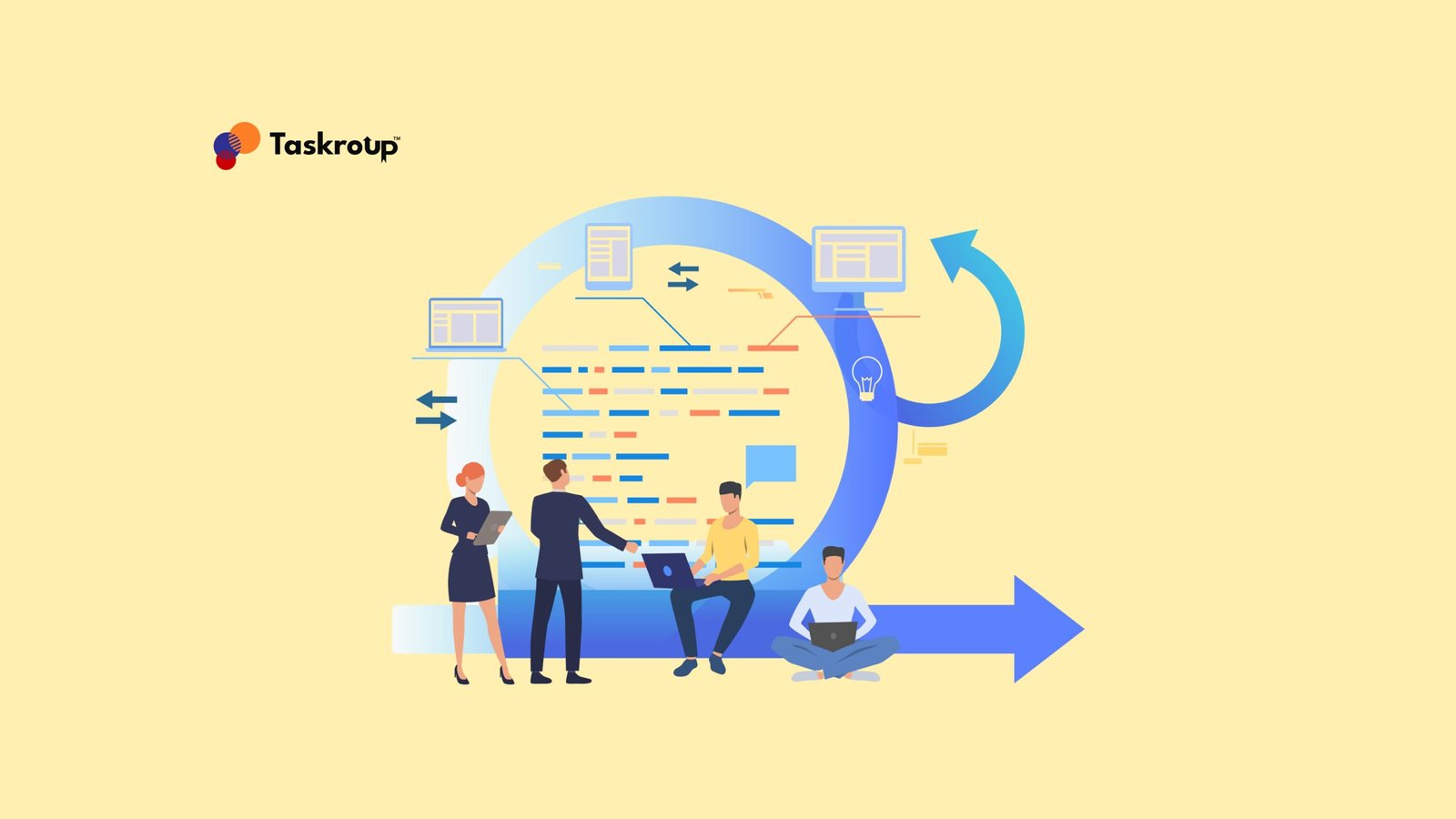
Scrumming Project Management is proving to be a necessary method by teams that are seeking to create high quality output agilely and collaboratively. We assist teams within Taskroup to embrace this approach towards enhancing efficiency, removing barriers and simplifying the process of project delivery. Scrum is a highly organized and yet dynamic model that assists organizations and companies to oversee intricate projects by dividing them into manageable components referred to as sprints. As a novice who entails oneself into the realms of Scrum, it is important to know the main aspects of the program to radically change the manner in which projects are handled.
The unique aspect of scrum is that it makes complex work simple, ensures the creation of team ownership, and improves communication. Scrum is based on cycles rather than long, linear processes that projects are treated like in order to provide regular progress by the team. Every sprint creates a better product increment which may be reviewed and improved.
Scrum is common in the software development world however, its concepts are applicable in marketing, operations, product design and service delivery. The approach promotes transparency, flexibility and continuous improvement- all of which enable teams to react swiftly to change.
An effective Scrum implementation is based on an effective team. Scrum functions consist of the Product Owner who determines the priorities, Scrum Master who oversees the team and removes impediments, and the Development Team who complete the sprint activities. All three roles collaborate to achieve transparency, responsibility and alignment.
Taskroup focuses on the role of communication in teams. When a team environment is open and team members are not only communicating amongst themselves but also with stakeholders, then the project is bound to be completed at a faster rate. A team-work atmosphere minimizes miscommunication, maintains the expectations explicit, and makes the end product aligning with the needs of the stakeholders.
The Scrum is built on sprints. The cycle is a time-boxed process, which can usually be two to four weeks, where a set of tasks is accomplished within a sprint. This organization eliminates instances of teams being overwhelmed by big project scopes.
Breaking work into iterative sprints allows teams to:
At the end of each sprint, teams analyze their progress and build a plan of the following cycle. This renders Scrum dynamic and makes sure that work conforms to the changing project requirements.
Scrum is united through communication. Meetings help maintain focus on progress and challenges and plans. Sprint reviews enhance teamwork with stakeholders, and sprint retrospectives enable teams to find out how they can improve themselves.
Strong communication in the teams also means that planning is easier, more problems are solved quickly and the overall performance is enhanced. Taskroup proposes the use of communication instruments and well-organized meetings to maintain clarity and productivity in all sprints.
Sprint backlog is a narrowed down list of tasks that are to be accomplished in the sprint. It is developed at the sprint planning meeting and is the commitment of the team in that cycle. A backlog acts as a roadmap on which the responsibilities and progress and priorities of the team can be monitored as the team moves on.
Backlogs are also helpful with flexibility. Teams might restructure or revise backlog points as they get to know more about the work, and in any case, they are always heading towards the right direction.
Scrum includes several structured meetings designed to support transparency and progress:
Teams decide what can be accomplished in the next sprint.
A short meeting where team members share updates and identify obstacles.
The team showcases completed work to stakeholders for feedback.
A reflection session to identify improvements for the next sprint.
These events ensure that everyone stays aligned, engaged, and focused on delivering continuous improvements.
Conventional waterfall methods are sequential in nature, in such a way that one stage is done before proceeding to the next. This complicates change and tends to slow down delivery.
Scrum, on the other side is iterative and adaptive. Teams are able to change fast, seek feedback on the stakeholders in the initial stages, and switch direction when required. It is this flexibility that made Scrum to be more popular in all industries.
To effectively use Scrum, consider the following:
This approach ensures smooth adoption and steady improvement for every sprint cycle.
Scrum ensures that teams are always organized, flexible and focused in the project lifecycle. In Taskroup, we do not think Scrumming Project Management is only a methodology, but a way of thinking and working together, learning and constantly improving. With the principles of Scrum, the teams will be able to become more efficient, attain better results and adopt a more agile and resilient working method.
