Physical Address
304 North Cardinal St.
Dorchester Center, MA 02124
Physical Address
304 North Cardinal St.
Dorchester Center, MA 02124

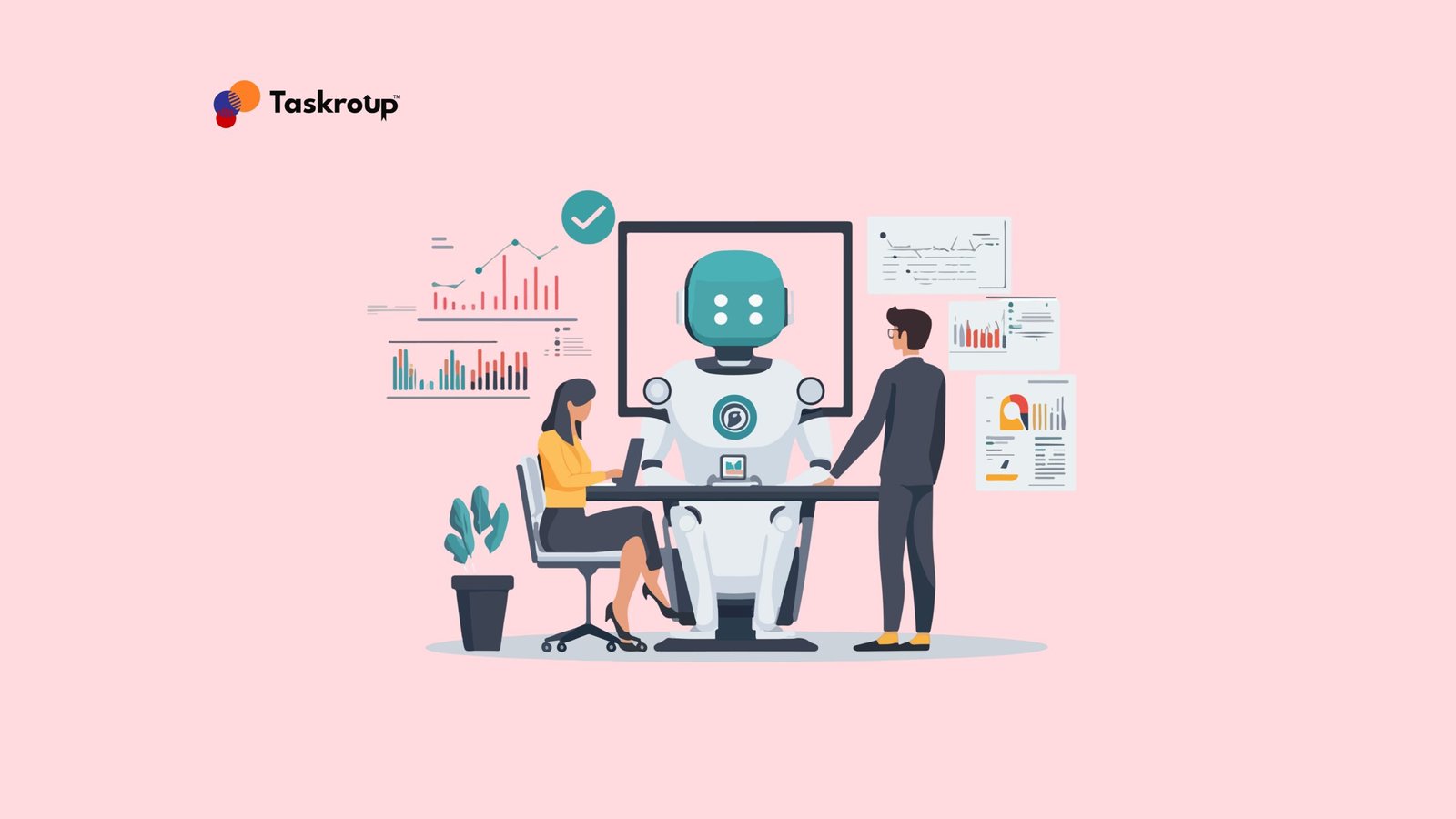
The intelligent application of Project Management Software has the potential to change the experience of planning, teamwork, and project outcomes. As artificial intelligence has become known, companies such as Taskroup are taking advantage of AI to optimize the processes, better decision-making, and even the efficiency in each and every stage of the project management process. AI is not a side-on addition but rather a fundamental facilitator of effective and foreseeable project implementation.
AI is transforming how organizations execute, handle, and allocate duties, individuals, and assets. It is capable of automating repetitive tasks, processing huge amounts of data, and giving real-time insights that can guide project managers to make more informed decisions. Regarding predicting risks, workload optimization, and documentation summaries, AI tools are seen as important in helping teams work on a project faster and with fewer challenges.
The capacity of AI to collect data across various sources and provide them in actionable formats is one of the greatest benefits of AI. This enables the project managers to know the performance trends, identify the possible problems early enough and implement corrective measures before delays are encountered. AI helps in maintaining consistency, precision and productivity throughout the project cycle, including the planning to the execution.
The best allocation of people, tools, and time are needed to have a successful project. AI is able to scan through and determine the capacity of the team, level of skills and project requirements in a short time, recommending optimal allocation of resources. This enhances utilization and lowers burnout, and assists teams in having a balanced work-load.
AI eliminates manual follow-ups and administration, automating the scheduling, progress, and status updates. It has the ability to remind, make changes in deadlines and could even give out assignments according to availability and priorities. This also aids in teams putting more emphasis on execution instead of micro-management.
Robots have a quicker analysis capability of large data compared to humans. Machine learning and predictive analytics help AI to highlight trends, detect anomalies, and give suggestions to aid in making better decisions. It can be risks assessment, predictive delivery schedules, or a resource estimation, but in any case, AI provides teams with credible and data-driven information.
Due to the existing gaps in communication, delays and misunderstanding of the project are common. AI assists in real-time meetings transcription, automatic meeting summaries, and real-time updates sharing. Team members can be facilitated to remain on track, find and use information as well as solve problems more quickly using chatbots and smart collaboration dashboards.
AI can automate scheduling, generate realistic timelines, and adjust plans based on progress or delays. It can also predict bottlenecks before they impact outcomes.
AI-powered predictive models help project managers detect risks early. These tools analyze patterns to identify threats like budget overruns, resource shortages, or timeline delays, enabling proactive mitigation.
Many modern tools offer smart features like meeting summaries, automated documentation, and intelligent notifications. These features help teams stay connected and aligned throughout the project lifecycle.
AI can process data from tasks, communication logs, customer feedback, and performance metrics to surface meaningful insights. This supports teams in making informed decisions at every stage.
Choose Tools That Fit Your Needs
Businesses should select AI tools based on their project requirements and ensure they integrate well with existing systems.
Maintain High-Quality, Secure Data
AI performance depends heavily on accurate and clean data. Companies must enforce strict data management and security practices to get the best outcomes.
Provide Proper Training
Even simple AI tools require onboarding. Training ensures teams understand how to use the features effectively and consistently.
Encourage Collaboration
AI works best when teams collaborate actively. Clear communication between project managers, team members, and stakeholders helps maximize value.
The effects of AI in project management will increase as it keeps developing. Ranging between intelligent automation to predictive success scoring, AI will assist organizations to increase the delivery rates, mitigate risk, and deliver more precise results on the projects. Organisations that adopt AI-powered systems will have an important competitive edge in terms of speed, quality and transparency.
AI is no longer a choice of businesses that want to achieve predictable and efficient outcomes. Its power to automatize work and improve cooperation, as well as deliver real-time information, makes AI empower all project lifecycle processes. Such platforms as Taskroup are enabling teams to plan, implement, and deliver projects more accurately and confidently. Incorporating the concept of AI into daily processes, organizations will be able to create a more efficient and future-oriented project environment.
